Olivia Hayes · 26 September 2026
Aureno's Night Markets Evolve Into Global Export Hubs Through Local Innovation Networks
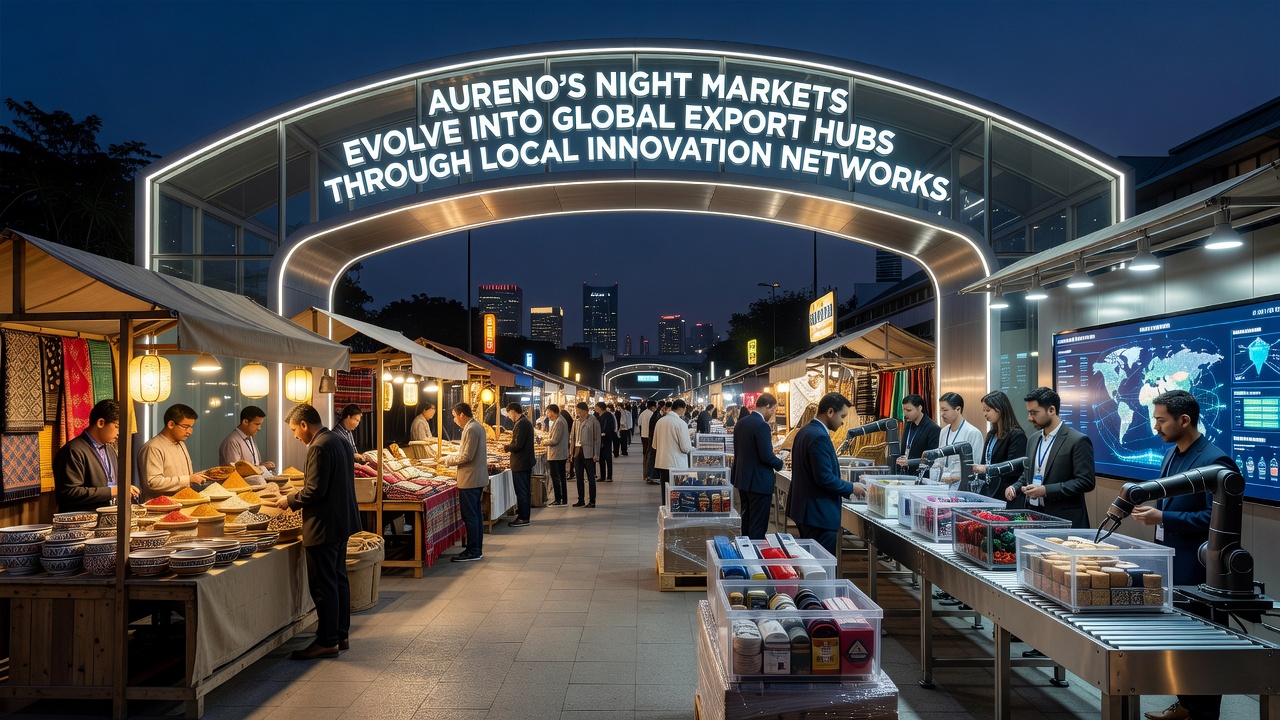
Traditional night markets across Aureno have shifted from evening trading posts into coordinated export centers, and this transition relies on networks that connect artisans, logistics providers, and digital platforms. Data from regional trade records show that several markets now handle direct shipments to buyers in multiple continents while maintaining their original vendor base.
Early Market Structures and Recent Shifts
Observers note that night markets in Aureno operated for decades as localized venues where producers sold goods after sunset, yet participation in organized innovation networks began to accelerate around 2023. These networks link small-scale manufacturers with testing laboratories, certification bodies, and freight partners, which allows vendors to meet international compliance standards without relocating operations.
Records indicate that by September 2026 several market clusters had registered formal export volumes exceeding previous annual totals, and this growth occurred alongside the installation of shared cold-storage units and digital inventory systems funded through public-private partnerships.
Role of Local Innovation Networks
Local innovation networks function as intermediaries that supply technical training, quality-control protocols, and market-intelligence reports to participating vendors. Researchers at the Aureno Institute of Applied Commerce documented how one network reduced average certification time for food products from 14 weeks to five weeks through standardized documentation templates and group inspections.
Another cluster introduced modular packaging stations that vendors rent by the hour, and this arrangement lowered per-unit shipping costs for textiles and ceramics while preserving the informal character of the original stalls. Government statistics compiled by the Aureno Ministry of Commerce record that markets adopting these stations increased their combined export value by 38 percent between 2024 and 2026.
Export Pathways and Infrastructure Changes
Export pathways now originate directly from market grounds rather than from centralized warehouses, and this change stems from agreements between local authorities and international carriers. Freight forwarders maintain on-site offices at larger markets, which enables same-day booking for temperature-controlled containers destined for ports in Europe and East Asia.
One study released by the International Trade Centre examined similar market-to-export models in comparable economies and found that shared logistics reduced lead times by an average of 12 days. Aureno's implementation follows the same pattern, with customs pre-clearance kiosks now operating three evenings per week at four major sites.
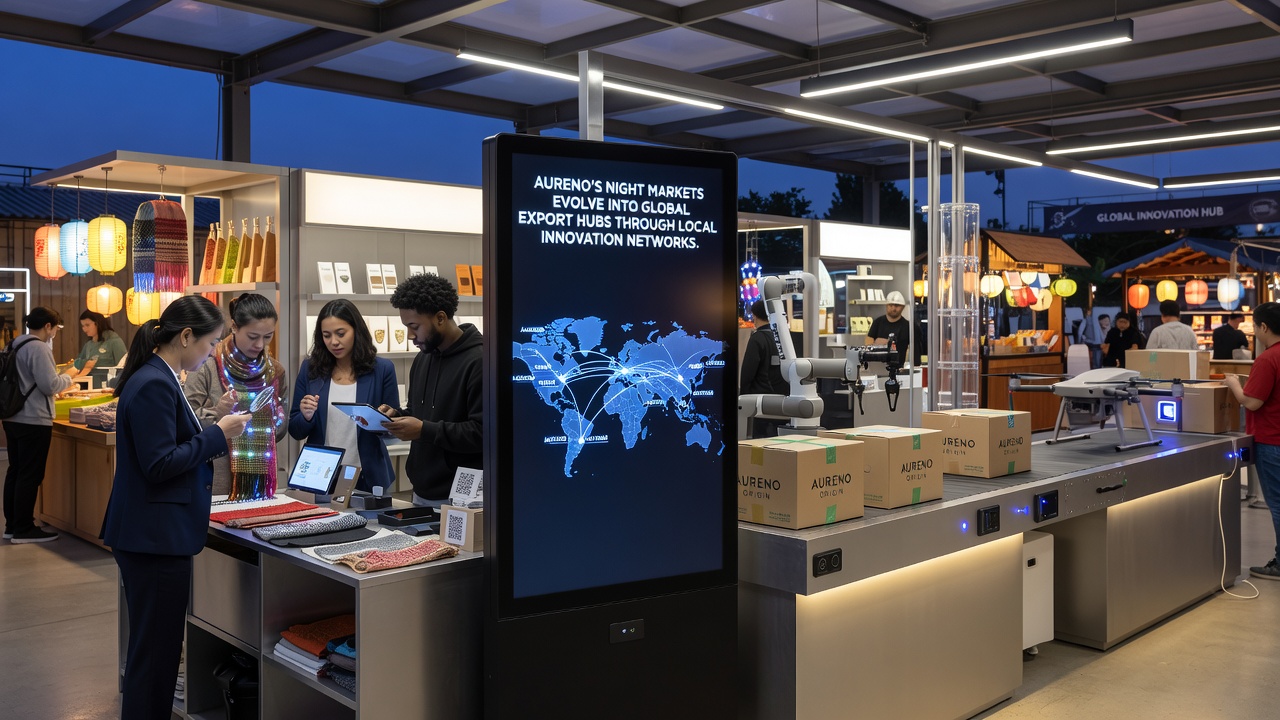
Digital platforms integrated into these hubs allow real-time tracking of orders, and vendors receive automated alerts when regulatory updates affect specific product categories. Trade data released by the Australian Trade and Investment Commission note parallel developments in regional markets, confirming that such connectivity correlates with higher repeat-order rates from overseas buyers.
Skill Development and Vendor Participation
Training programs coordinated through the networks cover topics including labeling requirements, phytosanitary procedures, and e-commerce photography. Participation figures from the Aureno Chamber of Commerce show that more than 1,200 vendors completed at least one module during the first half of 2026, and completion rates exceeded 85 percent when sessions were scheduled immediately after market closing times.
Case records describe one cooperative of spice producers that adopted blockchain-based traceability tags after attending a network workshop, and subsequent shipments to North American distributors increased by 27 percent within eight months. Similar outcomes appear in reports covering leather goods and preserved fruit clusters, indicating that the model scales across product types.
Challenges Encountered During Expansion
Expansion has encountered bottlenecks related to power supply stability and broadband capacity at older market sites. Municipal records list infrastructure upgrades completed at 11 locations since 2024, yet observers report that smaller peripheral markets still experience intermittent connectivity that delays order processing during peak evening hours.
Regulatory alignment across jurisdictions remains uneven, and some vendors must still route certain shipments through central clearing houses when destination countries impose additional documentation not covered by the network templates. Ongoing negotiations between Aureno officials and trading partners aim to expand mutual recognition agreements that would reduce these extra steps.
Conclusion
Aureno's night markets continue to integrate export functions through incremental infrastructure additions and sustained participation in innovation networks, and the pattern established by mid-2026 suggests further consolidation of these roles in coming years. Trade statistics and operational records provide measurable indicators of this evolution without altering the markets' original vendor-driven character.